Parent-friendly buying guide
How to Choose a Kids Electric Scooter
The best electric scooter for a child is not automatically the fastest model. A suitable scooter should match the rider’s age, height, weight, coordination and experience. Start with the manufacturer’s recommended age and maximum rider weight, then compare speed settings, braking, handlebar adjustment, scooter weight and the distance the child will ride on private land.
Choose by Age, Ability and Confidence
First-time and cautious riders
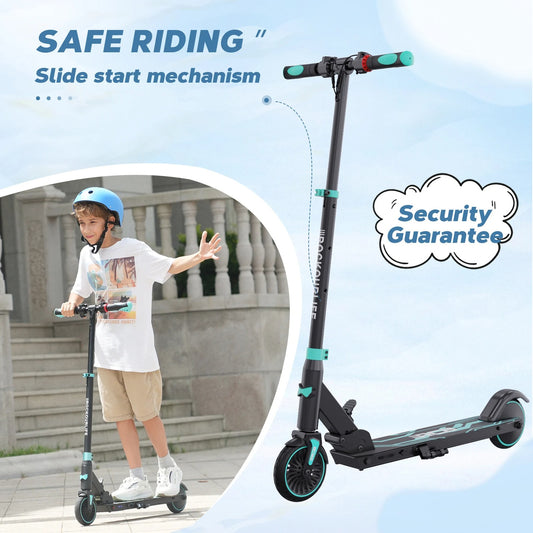
Prioritise a low maximum speed, simple controls, a stable deck and a scooter that an adult can easily carry. The EK03, EK05 and EK06 include beginner-friendly speed or motor specifications, but parents should still confirm the product’s stated age, height and weight limits.
Growing and improving riders
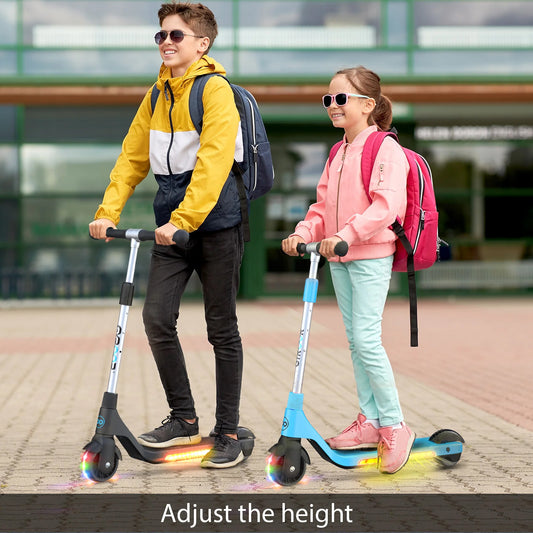
An adjustable handlebar and more than one speed mode can extend the useful life of the scooter. The EK04 offers selectable 8, 12 and 16 km/h modes, allowing a parent to choose a setting that suits the rider’s current confidence.
Older, experienced children
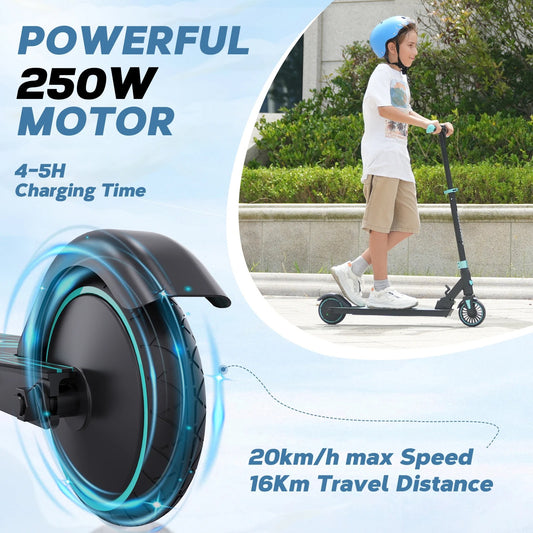
Older riders may value additional range and a sturdier ride. The EK02 is labelled for ages 8–16, with a stated 20 km/h maximum speed, 16 km range and 7.5 kg weight. Higher speed requires more space, closer supervision and appropriate protective equipment.
Important: Age alone is not enough. Always follow the manufacturer’s minimum age, maximum rider weight and operating instructions shown on the individual product page and manual.
Compare Our Kids Electric Scooters
| Model | Published age guide | Maximum speed | Motor / range | Best for |
|---|
| EK03 | Check product page | 8 km/h | 120W motor | Low-speed beginners; adjustable height and rear brake |
| EK06 | Kids & teens; confirm limits | 10 km/h | 80W motor | Lightweight, foldable first scooter |
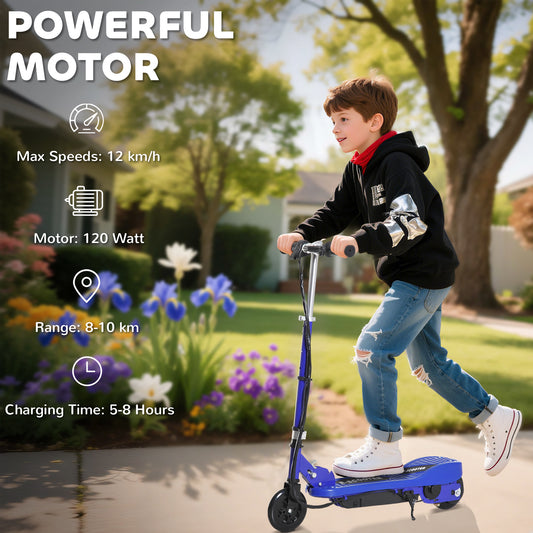
| EK05 | 7–14 years | 12 km/h | 120W motor | Growing riders who need height adjustment |
| EK04 | Check product page | 8 / 12 / 16 km/h | Check product page | Adjustable speed and LED lighting |
| EK01 | Check product page | 15 km/h | 6.5-inch wheels | Colourful lights and an LED display |
| EK02 | 8–16 years | 20 km/h | Up to 16 km range | Older, confident riders; lightweight 7.5 kg frame |
Specifications above summarise the information published for the current models and may vary by option or product update. Read the relevant product page and supplied manual before purchase and use.
Features Parents Should Compare
Speed control
Lower speeds and selectable riding modes can make learning more manageable. Choose a speed appropriate for the available private riding area—not simply the highest number.
Brakes and controls
Look for a brake and accelerator that the child can operate comfortably without changing their grip. Practise starting, slowing and stopping before longer rides.
Fit and rider limits
The child should be able to stand securely, reach the controls and steer without stretching. Observe the manufacturer’s stated age, height and maximum rider weight.
Weight and folding
A lighter folding scooter is easier for an adult to transport and store. Children should not carry a folded scooter without supervision.
Battery and range
Real-world range varies with rider weight, speed, terrain and temperature. Use only the supplied or manufacturer-approved charger.
Visibility
Lights and reflective clothing improve visibility, but do not make public-road use legal. Children must remain on suitable private land.
Kids Electric Scooter Safety and UK Law
In the UK, it is legal to buy a privately owned e-scooter, but it is illegal to ride one on public roads, pavements, cycle lanes or in public parks. A privately owned scooter may only be used on private land with the landowner’s permission. These restrictions apply even when the scooter is designed or marketed for children.
- Use a correctly fitted cycle or scooter helmet, plus knee and elbow protection.
- Provide active adult supervision and choose a clear, dry, level private area away from vehicles.
- Check the handlebar, folding mechanism, wheels, tyres and brakes before every ride.
- Start in the lowest available speed mode and teach controlled stopping before acceleration.
- Never charge a damaged battery, use an incompatible charger or leave a charging scooter unattended or charging overnight.
- Stop using the scooter if the battery becomes unusually hot, swollen, damaged, wet or produces an unusual smell or sound.
For current rules and battery guidance, consult GOV.UK e-scooter rules and GOV.UK battery safety advice.
Why Buy from Best E Scooters UK?
- UK warehouse dispatch: Current models are shipped locally for faster delivery.
- Free UK delivery: No standard delivery charge on the collection.
- Clear specifications: Product pages show the available motor, speed, range and rider guidance.
- Support before and after purchase: Contact our team if you need help comparing models.
Before ordering, review the individual product specification, our shipping information and refund policy. For product questions, contact us.
Kids Electric Scooter FAQs
What age is suitable for a kids electric scooter?
Suitability depends on the specific scooter, the child’s height, weight, coordination and experience. Current models include published guides such as ages 7–14 for the EK05 and ages 8–16 for the EK02. Always follow the product page and manufacturer’s manual.
Are kids electric scooters legal in the UK?
They may be bought and used on private land with the landowner’s permission. Privately owned e-scooters must not be ridden on public roads, pavements, cycle lanes or in public parks.
What speed should I choose for a beginner?
A lower-speed model or selectable low-speed mode is usually easier for a beginner to manage. The riding area, controls, brakes and the child’s ability matter as much as the stated maximum speed.
What safety equipment should a child wear?
Use a correctly fitted helmet, knee pads, elbow pads, closed-toe shoes and visible clothing. An adult should supervise every ride and check the scooter before use.
How should I charge and store a kids electric scooter?
Use the supplied or manufacturer-approved charger on a hard, dry surface away from escape routes and combustible materials. Do not charge unattended or overnight, and stop using a battery that is damaged, swollen, unusually hot or wet.